
Contact Us | Subscribe to eNews  
  
Like the Friars on Facebook  Foolow the Friars on Twitter   Follow the Friars on YouTube  Follow the Friars on Vimeo  
In The Words of Fr. Paul Wattson, SA

Who We Are

Father Paul Wattson, SA

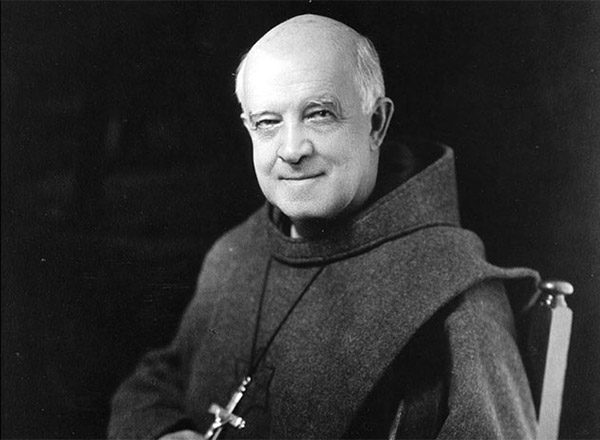
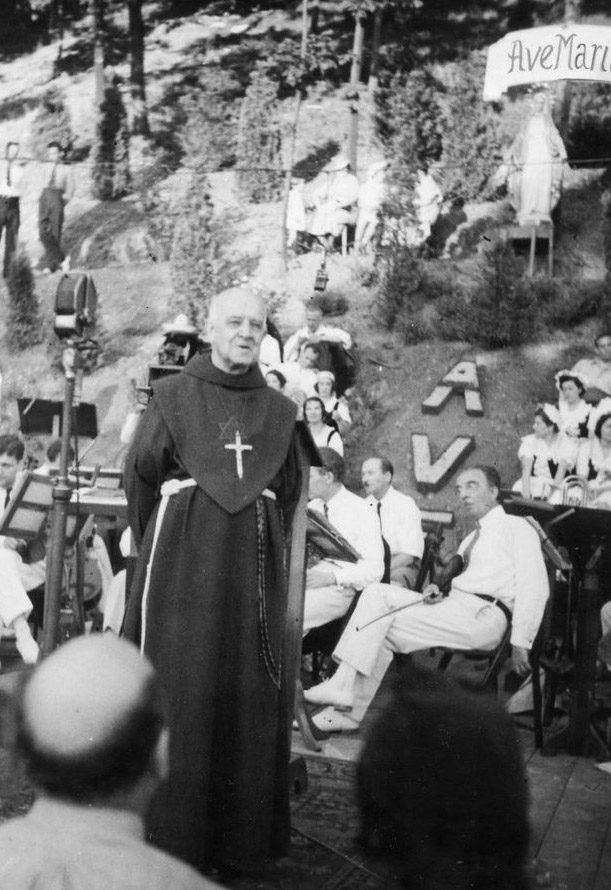
Fr. Paul Wattson, the founder of the Franciscan Friars and Sisters of the Atonement, gave hundreds of sermons, conducted numerous retreats, delivered many radio addresses, and wrote extensively in four magazines: The Pulpit of the Cross, The Lamp, The Candle, and The Antidote.

January 16, 2013 was a special day for the Franciscan Friars of the Atonement for it marks the 150th anniversary of the birth of our founder, born Lewis Thomas Wattson, whom the world would come to know and love as Father Paul of Graymoor.

In celebration of this special Anniversary, we will be sharing with you weekly some of the "Words of Fr. Paul."


June 13, 2013

St. Anthony of Padua (June 13)

(Fr. Paul Sermon, Aug. 1, 1926)

It is a very easy thing if God wishes it, to smite President Plutarco Elias Calles of Mexico with blindness, or to open his eyes as the eyes of the servant of Eliseus [Elisha] were opened, or as the eyes of Ezzelino, the great tyrant of Italy, were opened in the days of St. Anthony.  When Ezzelino was about to capture their beloved city of Padua, the citizens of Padua came in distress to St. Anthony to help them, and St. Anthony prayed to God and said, “Take me into the presence of Ezzelino,” and he went into the presence of Ezzelino, and to the astonishment of his soldiers, Ezzelino’s face blanched with terror, he fell on his knees and cried for mercy, promising to withdraw his armies and leave Padua free.  Who had done it?  The same power that had operated through Eliseus in the Old Testament, had operated through St. Anthony of Padua in the New Covenant, God had opened the eyes of this man to see the terrors of the Lord and for the time being he was brought to his knees.  It may be that in answer to our prayers God will show Calles a thing or two that will cause him to tremble within his soul with terror and he will no longer lift himself up against the Lord, lest a dreadful retribution come upon him.

Let us, therefore, pray with faith, with the realization of this tremendous power that is behind the prayer of faith, that that which, humanly speaking, seems quite incredible, will come to pass and our Holy Father’s earnest petition, supported by your prayers and my prayers, will be realized and the extreme measure of an interdict, which has not been imposed upon a nation for three centuries, may be withheld from unhappy Mexico.

For a printable version of this article click here.


June 5, 2013

Most Sacred Heart of Jesus (June 7)

(Fr. Paul Broadcast on St. Anthony Hour July 2, 1939)

When we contemplate the love of Christ and measure its length and depth and breadth and height, it ought to stir up within us a reciprocal love, corresponding to the love of the Sacred Heart for us.

The trouble with us poor sinners is that by nature we are so cold and selfish that we really have not the capacity to love Christ as he loves us. But here comes into play sanctifying grace. As we correspond to the overtures of the Divine Lover and stretch out our arms to go to him, when He approaches us, we experience the operation of sanctifying grace in the soul. Jesus said: "I have come to set the world on fire and how I wish it were already kindled." [Lk.12:49].

My heart may be by nature as hard and cold as a bit of anthracite, dug by the miner's pick from the mountainside, and yet, if it be thrown into a furnace of fire, the anthracite is ignited and burns with the ardor of the flame that envelopes it. So, when my heart is united with the Sacred Heart of the Divine Redeemer, which is as it was revealed to St. Margaret Mary a flaming furnace of love, that love enkindles my heart.

For a printable version of this article click here.


May 30, 2013

Corpus Christi (June 2)

(Fr. Paul Sermon June 6, 1926)

here is a Solemn High Mass today because we are still within the Octave of the Feast of Corpus Christi.  This feast has been instituted by the Church to give the people an opportunity of paying in a marked, special manner external devotion to our Lord Jesus Christ present in the Holy Eucharist. Consequently, on the feast of Corpus Christi itself we had a very beautiful Mass on the Mountain; the church was filled because its limited capacity can be filled just by the members of the community itself, very few of those in the neighborhood found it convenient to be present.  Nevertheless, it was a very beautiful and solemn ceremonial, and after the Solemn High Mass the Blessed Sacrament was exposed and we carried our Lord in triumphal procession from the Shrine of the Little Flower up to the Holy Spirit Chapel and again back to the church, concluded by Benediction of the Blessed Sacrament.

Today the Church brings home to us in the Holy Gospel a certain aspect of the Eucharist which ought to be of profound interest to us all.  There are few things in the world that interest men and women so much as suppers and banquets.  If a gathering of men is to be brought together on some special occasion, there is nothing that is more attractive in drawing them together than the fact that there is going to be a banquet.  On a certain occasion not long ago I was invited to a ceremony and, of course, a banquet was one of the elements of the entertainment.  About six hundred persons in a large hotel in New York, we sat down to a banquet and it was not very much after all, even though it cost four dollars a plate, and in another part of the same hotel there were over two thousand Jews who sat down to a similar banquet in the midst of a drive to raise several million dollars of money to aid poor Jews in the East.  They find that even people with the prospect of subscribing considerable sums of money can be gotten best by inviting them to a banquet, even though it may mean a thousand dollars apiece as the result of the banquet.

Now Our Lord uses this in a parable by telling of a man who made a great supper and invited many.  The astonishing part was that the guests made excuses, although it was a great supper.  One said that he had bought a farm and he must attend to that; another a yoke of oxen, he must look after the oxen; and another had married a wife, but in reality it was a question of counter-attraction.  Because what does a man get a farm for but to raise produce so that like Dives, he might sit down and fare sumptuously every day. And if a man has a yoke of oxen it is either to kill the oxen and feast upon them, or else use the oxen so that he may, by earnings from them, have enough to purchase in the market the things he needs for daily food.  And when a man marries a wife, of course the very interesting part of married life is to have your little home and then the little meals daily which the wife provides, and there will be children.  So after all, it is a question of counter-attraction, and so, my dear friends, it has always been down through the centuries.

The man that made the great feast was our Lord Jesus Christ, and that which makes the feast great are the elements that are offered as food in that banquet, the most extraordinary banquet because, although the elements that are embraced in the banquet are such simple elements as pure wheat, or bread and wine, yet these elements are transmuted, or transubstantiated, in the feast by the words of consecration until they cease to be bread and wine and they become the body and blood, the soul and divinity of Jesus Christ.  In other words, it is not only God who is the host, but also the banquet, and he offers in this great feast the stupendous gift of his own body and blood, and because that body and blood by the Incarnation have been hypostatically united to the divinity, there goes along with the body and blood of Christ his soul and his divinity, and that is what he gives us in this feast.  And surely if our eyes were opened to understand and appreciate the banquet, we would never refuse an invitation to sit down at that banquet.  It is only because of lack of faith, or absorption in the carnal side of life that blinds our eyes to the quality of the feast, that some reject the invitation altogether. Others just receive it often enough to keep their standing as communicants in the Catholic Church, but if we properly appreciated it, we would be most eager to receive it as frequently as possible because of the effects of the feast.

For a printable version of this article click here.

May 24, 2013

Most Holy Trinity (May 26)

(The Lamp Aug. 1919 p.504)

It is recognized by all, that the at-one-ment or unity between God and the human creature reaches its highest perfection and glory in the person of our Lady of the Atonement herself, for she thereby has become the daughter of God the Father, the mother of God the Son and the spouse of God the Holy Spirit. It is in recognition of this intimate relationship of our blessed mother with the three Persons of the Holy Trinity that the children of the Atonement are accustomed to address her by a Threefold Salutation, as follows:

We salute you, holy Mary, daughter of God the Father and entreat you to obtain for us a devotion like your own to the most sweet will of God.

We salute you, virgin mother of God the Son, and entreat you to obtain for us such union with the Sacred Heart of Jesus that our own hearts may burn with love of God and an ardent zeal for the salvation of all people.

We salute you, immaculate spouse of God, the Holy Spirit, and entreat you to obtain for us such yielding of ourselves to the blessed Spirit that he may in all things direct and rule our hearts and that we may never grieve him in thought, word, or deed.


We cannot recommend too strongly the daily use of this Threefold Salutation of our blessed mother. It sets our Lady of the Atonement before us as the perfect pattern and model of union with God, whom we should strive to imitate as good children seek to follow the holy example of their mother.

 Is it union with God the Father we seek? Then the blessed mother becomes our model and pattern of obedience and we know that the only way to please the Father is to do his will and avoid all sin.

 Is it union with God, the Son, we strive to realize? Then it is union with his Sacred Heart by means of Holy Communion, even as he has promised, "Whoever eats my flesh and drinks my blood dwells in me and I in him." [Jn. 6:56] And we are reminded that he derived originally both that flesh and blood from his immaculate mother and so it comes to pass that union with Jesus is also union with Mary.

Is it union with the Holy Spirit that our soul craves for? Here again Mary is our example. How intimate was her relation with the Holy Spirit, who caused her to be conceived without sin and chose her later to be his own Spouse. How perfect her love and devotion to the blessed Paraclete and how completely she surrendered herself to be illuminated and directed by him in everything. What a model for us and how earnestly should we entreat her to obtain for us from her divine Spouse the grace of a perfect sanctification, even as St. Paul prayed for the Thessalonians:

May the God of peace sanctify you in all things, that your whole spirit and soul and body may be preserved blameless in the coming of our Lord Jesus Christ. [1Thes.5:23] 

For a printable version of this article click here.


May 15, 2013

Pentecost (May 19)

(The Lamp Feb. 1930 p.56)

We very much desire that you should know the third person of the Holy Trinity better and love him more. We do not know and love the Holy Spirit very intimately and have not a keen appreciation of the mighty power and sweetness of the most holy Paraclete.

Take your Bible and read through slowly and attentively the Acts of the Apostles, stopping at every mention of the Holy Spirit and making a meditation upon this wonderful Being, who proceeding from the Father and the Son flooded the Apostles, the priests and the deacons and all the multitude of the first believers with grace and wisdom and power and love and joy beyond anything which Jerusalem, Antioch, Samaria, Ephesus, Athens and Rome had witnessed since their foundation.  Study those chapters prayerfully with your mind and heart fixed solely on the manifestations of the Holy Spirit and you will begin to cry out, “O most blessed Paraclete, O adorable Spirit. Until now I have known you and I have loved you so little!”

The Holy Spirit did not come down with the sound of a mighty rushing wind on Pentecost day, work signs and miracles at the hands of Sts. Peter, Paul, John, Stephen, Philip, Barnabas and Silas and then return to heaven as suddenly as he came.  He is still with the Church--the same Omnipotent God--one with the Father and Son, yesterday, today and forever.

Moreover, he dwells with you. Perhaps you do not know that your body is his temple.

Pray and deepen your love and knowledge of the divine Person, whom our Lord Jesus Christ called the Comforter and promised to send to abide with you forever.

This divine Guest can impart to your soul more joy in five minutes than all the people and beautiful things of the world can give you in a life time.

For a printable version of this article click here.


May 8, 2013

Ascension of the Lord (May 9)

The apostles themselves on that day stood on the Mount of Olives, that very same mount where they saw Jesus Christ in the agony and bloody sweat not so long before. They saw him taken up by the cloud out of their sight. They remained there looking after him, hoping to get another glimpse of him, when an Angel appeared and said,

Why are you men from Galilee standing here, looking into the sky? Jesus, who has been taken up from you into heaven, this same Jesus, will come back in the same way you have seen him go there. [Acts. 1:11]

They then went forth to fulfill the command and charge given to them. They became strangers and pilgrims on the face of the earth, passing from one place to another, preaching the gospel to every creature and making disciples among all the nations of the earth. They had no abiding city here, but they looked forward to the one to come, when their earthly pilgrimage would be over and they would be taken up into heaven.

St. Peter, at the end of his long life of work for God, knowing that he was doomed to die by the decree of Nero, allowing himself to be persuaded by the anxious Christians to flee, as he was leaving the city, met a vision of Christ carrying the cross, and in answer to his question, "Quo vadis?" Our Lord answered, "I am going to Rome to be crucified." This brought back the heavenly vision to St. Peter and he went back to be crucified, to endure the cross for the joy that was set before him, confident that all would be over soon and that he would be taken up to his heavenly home, that he would overcome, as Christ had overcome.

St. Paul, having the same contemplation, said:
I want no more trouble from anybody after this; the marks on my body are those of Jesus.[Gal.6:17] and I know that a crown of heavenly glory is laid up for me on the day of my passing out of this world to the glory that shall be revealed and to the joy of the beatific vision.[See 1Tim.4:8]

We should think of the joys that will be ours in those days, when we shall look upon the Lamb that was slain, and those that have been redeemed will follow the Lamb wherever he goes in his kingdom. [See Apoc.14:4]

We should also think of that vision which St. John saw, which made such a profound impression upon him, the great wonder in heaven, a women clothed with the sun and a crown of twelve stars on her head, the moon her footstool, [See Apoc.12:1] our Lady of the Atonement. We should also think of the joy of beholding her and of hearing her sing her Magnificat, beautiful beyond that of any song ever sung upon earth.

For a printable version of this article click here.


May 2, 2013

May: Month of Blessed Virgin Mary (May 1 - 31)

(Fr. Paul Retreat Conference Aug. 19, 1926)

Theologians have discussed  among themselves what God found most attractive in the Blessed Virgin and in the opinion of some it was her humility, others that it was her chastity, but as humility is the mother of chastity they are very closely associated together. When the Archangel Gabriel suddenly appeared in the presence of the Judean maiden while she was at prayer, and meditation, and overwhelmed her with that startling announcement, her anxiety about her virginity was evidenced by her answer, "How can this thing be, seeing I am a virgin?" {Lk.1:34]

Very exalted in the Scriptures was the place that was given to the virgins, "How beautiful is the chaste generation with glory." [Wis.4:1] That is voicing God's estimate concerning holy chastity.  In the first sermon he preached, as far as the evangelistic records go, Jesus himself, the king of virgins, said, "Blessed are the pure and clean of heart, for they shall see God." [Matt. 5:8] That is a promise not merely of the hereafter when we attain to the Beatific Vision, but it is also true in a very large measure in this world.  Who can so well see God as the one who carries within her bosom the virgin heart of purity and chastity? She holds her converse with God. She banquets with him. She lives in the atmosphere of the sense of his loving and tender affection. She feels around her spiritually the embrace of his loving arms.

For a printable version of this article click here.


April 24, 2013

St. Paul of the Cross Feast Day (April 28)

(Fr. Paul Sermon, Nov. 21, 1926)

Let us have the attitude of Abraham, the man of faith --- who had no abiding city on the earth, but he sought one to come --- to be prepared for any misfortune, any difficulty, any adversity that may come our way, to live daily in the thought that the day may bring forth a cross, and if it comes, to see in that cross not an evil but something which with joy we can offer to God in union with the cross of Christ, to meet our trials, our difficulties, our adversities when they come as Saint Paul of the Cross when he saw in vision one of the crosses looming before him he knew perfectly well it was the prophecy of a trial, or some pain, or suffering that was coming to him, and yet he ran by supernatural love with his arms outstretched to embrace that cross.

For a printable version of this article click here.


April 18, 2013

Earth Day (April 22)

(Fr. Paul Retreat Talk, Aug. 2, 1925)

Now we should rejoice in that family in which it has pleased God to place us, for we feel that he designs good things for the members of this family that are faithful. A little outward token of that favor is the beautiful place he chose and selected out of his watchful providence to be our homeland, the Beulah Land of the Atonement as we sometimes call it---the family land at the Atonement, the mother land. We ought to rejoice in and appreciate the great beauty of this chosen spot.

A gentleman who lived in the outskirts of Cincinnati where the wealthy people live, a locality deemed very beautiful, but mostly by artificial cultivation, went into raptures over the wonderful beauty of Graymoor, and those who come from all places praise it and admire it. Not long ago a cousin of Grover Cleveland, the former President, an Anglican, came up to the Mountain. We took him up to the top of the water tower. He said again and again, it was the most beautiful place he had ever seen.

For a printable version of this article click here.


April 10, 2013

Anniversary of Birth of Mother Lurana (April 12)

(Fr. Paul Radio Talk, Nov.16, 1936)

At that time: Jesus spoke this parable to the multitudes:

The kingdom of heaven is like to a grain of mustard-seed, which a man took and sowed in his field, which is the least indeed of all seeds, but when it is grown up, it is greater than all herbs and becomes a tree; so that the birds of the air come and dwell in the branches thereof. [Mat.13:31-32]


Thirty-eight years ago Mother Lurana Mary Francis came into the Graymoor Valley almost alone, ten days before Christmas, to make her Foundation and now the Sisters of the Atonement have spread out from the Mother House until they are found along the Atlantic coast, in New York, Philadelphia, Washington, down in the Lone-Star State, along the coast of the Gulf of Mexico, in California, in British Columbia, in North Alberta, Canada, and, crossing the Atlantic, we find them in Ireland, in Assisi and their last establishment in the City of Rome close to the walls of Vatican City.

For a printable version of this article click here.


April 4, 2013

Divine Mercy Sunday (April 7)

(Fr. Paul Sermon in Hereford, Texas, June 1922)

This is the breadth of God’s love: with arms outstretched he says, “I will never turn away anyone who comes to me.” [Jn.6:37]

My dear friends, remember this, his appeal to you. You may not be able to rejoice with us in our great inheritance of the faith. But Christ loves you, and if you come to him and correspond to the love he gives you, be true to him, love him above all things, put your trust absolutely in him, the charity of Christ is broad enough to embrace you.

The cross Christ had a socket dug for it. It must have been a deep socket to keep the cross up while Christ was hanging there. We learn from that, that such is the compassion and mercy of Christ that he goes down into the very dregs and depths of sin. In his love he tries to lift up the sinner.

So let us have a love and a compassion for our fellow men, so that we would not receive the rebuke of Christ.

Remember the woman in adultery they brought to Christ. They said the law of Moses commanded that such as she should be stoned. “What, Master, say you?” they asked. He wrote on the ground. And he said, “He that is without sin among you, let him cast the first stone.” The spirit of God that was within them searched the hearts of those men that they might realize their own guilt. Each one, stricken in conscience, left. When he arose, he said, “Woman, is there none that will condemn you?” She answered: “None, Master.” Then he said, “Neither do I condemn you. Go, and sin no more.” [Jn.8:3-11]

For a printable version of this article click here.


March 27, 2013

Good Friday (March 29)

(Fr. Paul Radio Talk, Sept. 1935)

In the Third Book of Moses, called Numbers, we read how the people spoke against Moses, and the Lord sent among the people fiery serpents, which bit them and killed many of them.

Upon which they came to Moses and said, "We have sinned, because we have spoken against the Lord and you. Pray that he may take away the serpents from us." And Moses prayed for the people. And the Lord said to him, "Make a brazen serpent, and set it up for a sign. Whosoever, being struck shall look on it, shall live."

Moses, therefore, made a brazen serpent and set it up on a pole, which when they that were bitten looked upon they were healed. [Num.21:7-9]

Jesus said to Nicodemus, a ruler of the Jews:

As Moses lifted up the serpent in the desert, so must the Son of Man be lifted up, that whosoever believes in him, may not perish, but have everlasting life. For God so loved the world, as to give his only begotten Son; that whosoever believes in him, should not perish, but may have life everlasting. [John 3, 14-16]


Believe, oh, my friends, on Jesus crucified as your Saviour and Redeemer and have recourse to him that in his precious blood your sins may be washed away and your name be written in the Lamb's Book of Life, never to be blotted out. (Fr. Paul Radio Talk, Tues. Sept. 1935)

For a printable version of this article click here.


March 20, 2013

Palm Sunday (March 24)

(The Lamp Apr. 1917 p.165)

On the eve of the great European war, before the thunder of the first gun started the mighty conflagration, it is not difficult to picture to ourselves the figure of our divine Lord standing upon some peak of the Swiss mountains, looking down over the vast countries, smiling in their prosperity and peace, as Jerusalem in her splendor was bathed in the sunlight of Palm Sunday. And as he weeps over these mighty nations, we hear him saying:

O, Europe! Europe! How often would I have gathered your children, together as the hen gathers her chickens, under her wings, and you would not. Behold, your lands are left to you desolate because you knew not the things that concern your peace; and now they are hid from your eyes.

Alas, that at the present hour there should seem to be so little disposition on the part of the warring nations to turn towards the risen Christ, and hailing his salutation "Peace be unto you," to cry out with one voice, "Lord, evermore give us this peace." But as the carnage goes on and in ever-widening circles threatens to involve the new world as well as the old, we patiently wait that hour of Christ's triumph when at last men will see the folly of striving to overcome evil with evil and force by force and murder by murder, and, catching the spirit of love and sacrifice from the Supreme Master of heaven and earth, will unite in making the kingdoms of this world the kingdoms of the Lord's anointed, and speed the day of Christ's millennial reign, when the lion and the lamb shall lie down together, and Our Lord's salutation be operative over all of the earth: "Peace be unto you, and again I say, Peace be to you." [Jn. 20:19 ]

For a printable version of this article click here.


March 13, 2013

St. Patrick (March 17)

(The Lamp July 1916 p.303)

If you are interested to know anything about my nationality and descent, I don’t mind telling you. I was born in the United States and so were my parents before me. My paternal grandparents emigrated from Wales and were as Gaelic as Gaelic can be; my maternal grandfather was of Scotch descent and I believe also Gaelic; my maternal grandmother belonged to a New England family which originally migrated from Old England. I figure out that I am about twenty-five percent English and seventy-five percent Gaelic.

And being more of a Gael than anything else, I am not a very likely person to fling contempt and ridicule at the children of the Gael. In fact, I am just as proud of my Gaelic blood as one can be consistently with Christian humility. Please pardon this bit of personal interjection, but I value too highly the loyal attachment of many thousands of Irish Catholics to Graymoor to have any of them deceived or misled by an assumption as baseless as the fabric of a dream.

For a printable version of this article click here.


March 6, 2013

Third, Fourth and Fifth Sundays of Lent (March 3, 10, 17)

(Fr. Paul Sermon, April 20, 1924)

The Church for forty days has been keeping Lent with her divine Head, and during the last week particularly she has been following him step by step from the time that he came triumphantly riding on an ass into Jerusalem on Palm Sunday amidst the Galileans, until his betrayal by Judas Iscariot.

Jesus went into battle – it was a terrific battle – a battle worthy of a God. It was a battle so severe that even he, with bloody sweat from his brow, rolling down even to the ground cried out, “Father, if it be possible, let this cup pass from me; nevertheless, not my will but yours be done.” [Lk.22:42] And he has called us to follow him. He has called us to enter into a battle also. We must fight. That is the principle of our religion.

He that overcomes shall have the right to the tree of life. He that overcomes shall eat of the manna of my kingdom. He that overcomes shall be as a pillar in the temple of my God. He that overcomes shall sit on my throne even as I overcame and sit with my Father.[See Apoc.2:17,3:21]

This old body is like the old Adam, full of malice and wickedness. You have to look abroad in the world to see that we have just gone through one of the most terrible experiences that the human family has gone through from the foundations of the world. [WW I] All the genius of men invented dreadful instruments of destruction to destroy each other. What they did not do by destroying in battle, [they have done] by iniquity, hatred and sin, one against the other. Millions of the human family have perished in the most dreadful way because of the malice and wickedness of the human heart, unregenerated by the grace of God.

Each of us have more or less of that old leaven in us, and there is a great deal of it still with us. It is the exhortation of the Apostles as well as the teaching of Christ to purge out this leaven, to crucify the old man. The whole struggle of our life should be to get rid of the old man that Christ alone may live in us. That this pure bread of the Eucharist, the host, that is nothing else but the Body and Blood of Christ, the sincere one, he that said of himself, “I am the truth,” [Jn.14:6] might be received into us, purge away sin, malice, substitute for it divine life and make us pure, holy, undefiled in our lives. That is the victory that you and I are called upon to achieve. Man standing alone without the grace of God cannot perform that victory. “The good I would, I do not, the evil I would not, that I do.” [Rom. 7:15] The divine One comes upon us, changes us.

We will ride to Jerusalem. Jesus told two of his disciples to go into a certain place, in the crossroads, and they would find an ass colt. He said to bring him, and if the owner says anything, say the master has need of it. When they brought it, he rode the ass triumphantly into Jerusalem. You and I are represented by that ass. Christ wants to ride us triumphantly into the heavenly Jerusalem. Only by the master the ass will yield, saying, “Yes, Lord, this body belongs to you, I don’t claim it any longer. You rule it, bring it to Jerusalem.” He will bring it triumphantly into the heavenly city. He will make it obedient, take away the maliciousness from him, then he will bring him into heaven.

Take St. Francis. He spoke of his body as Brother Ass. That is the proper name he called his body. Our Lord struggled with him. In his younger days he loved to dance, to carouse. He liked to go into minstrels, spend his money drinking the wine of Italy, until perhaps his head turned around like a top. The Lord came and said,

I have something else for you to do than that. I want to make you a great soldier, a leader of soldiers. You have to put that away, give yourself to me.

Francis responded to it, went into the caverns of the earth, prayed and communed with God, until he learned the work God would give him to do. Then at the end Francis spoke to Brother Ass, and he said,

Brother, you have been a good brother. I have been sometimes hard to you, and you have not rebelled.

Francis brought that body into such perfect subjection, he became perfect before God so that the miracles of Christ were repeated in Francis. Because Francis, like St. Paul, knew only the crucified, he gave his body to Jesus Christ. Jesus Christ possessed it fully. When he possessed it fully, he could do with Francis whatever he wanted, because it was no longer Francis, it was Christ that possessed St. Francis’ Brother Ass.

That is the struggle for you and for me. It is to be rid of self, and oh, how we ought to hate self, when we see the contemptible things selfishness will do. When we see the weakness of human nature, the harm, the hurt it will do its fellow neighbor, the impurities it is capable of committing, we should hate, despise, flee from self. We should be glad to abandon ourselves to the risen Christ, and say:

Come Lord, take possession of me, reign from the crown of my head to the sole of my feet. Do with my hands what you will, do what you will with my feet, send them on errands of mercy even as you did yourself; my head, body, soul, all are yours, possess them, dominate them, and drill them. That is all that I desire.

Then, when you have done that, he will purge out the old leaven of malice and wickedness. He will substitute his own sincerity, his own truthfulness, his image will be struck upon you; his character will be upon you; you will be another Christ, by purity, by love and charity, speaking his words of benediction, speaking his thoughts of purity and holiness; thinking the thoughts of heaven, putting the corruptible things of the world under your feet.

That is the victory then, our faith in our risen Lord, the giving of ourselves to him in order that he may reign in us.

For a printable version of this article click here.


February 27, 2013

One & Two Liners of Fr. Paul

Don’t be fooled!

Where we expect the least, we sometimes find the most. (Fr. Paul to to Bro. Anthony Wallerstein, SA, July 22,1907)

Happy in old age:

I note that you have been through some pretty severe operations; but it is quite wonderful to live to be 84 years of age and at the same time to be cheerful and happy, owing to the never-failing presence of God the Holy Sprit, exercising you in the Christian virtues of faith, hope and charity. (Fr. Paul to M. McG. of New York City, May 24, 1935)

Humor in working for Christian Unity:

I note that you belong to the High Church of England. In other words, you are one of our neighbors. I hope, however, you will cross the street some day and enter the Fold of Peter. ( Fr. Paul to McC. of Beacon, N.Y., Jan. 9, 1933)

For a printable version of this article click here.


February 20, 2013

Chair of St. Peter Feast (February 22)

(Fr. Paul Sermon Jan. 21, 1929)

I told you how The Lamp was lighted yesterday morning. The next development in the Church unity vocation of the Society of the Atonement was the origin of the Octave itself. It came about in this wise: Just about the time we were preparing copy for the first issue of The Lamp, there appeared a notable book in England entitled England and the Holy See, the author of which was the Rev. Spencer Jones, M.A., the rector of an Anglican parish, and the preface was written by a no less distinguished layman than Lord Halifax, president of the English Church Union. In this book was set forth very lucidly the position of the Holy See as the center of Catholic unity, and it was an essay to inquire whether some of the obstacles which stood in the way of the return of the Anglican body to its pre-Reformation relationship to the same Apostolic See, could be overcome.

Reading the book we put ourselves into communication with Rev. Spencer Jones and he responded with alacrity and became one of the regular contributors towards the pages of The Lamp. In the course of time, or about four years after The Lamp was lighted, Mr. Jones, who had formed the Society of St. Thomas in England, suggested in a letter that it would be an excellent thing to arrange to have each year on S t. Peter’s feast sermons preached in the various churches bearing upon the Papal claims. This was the seed thought which suggested to the mind of the editor of The Lamp the Church Unity Octave, because it occurred to me that there were two feasts very happily in juxtaposition in the mind of our Lord in his prayer, “That the world may believe that you, Father, have me.” {Jn. 17:21]

These two feasts come in the month of January, the feast of the Chair of St. Peter at Rome and the feast of the Conversion of St. Paul. The witness of The Lamp was to the Chair of Peter as the center of a reunited Christendom and, therefore, it desired to exalt that particular feast and call the attention of the world to it and to make it the beginning of a time of prayer when the faithful everywhere might unite at that time in echoing the prayer of our great high priest that we might all be one. It seemed the best of all times for such united prayer because it culminated with the feast of the conversion of the great Apostle to the Gentiles. First of all we must have unity, and as a result of unity then the world will be conquered, the cross will everywhere triumph and Christ will be recognized universally as the Savior of all people. (Fr. Paul Sermon Jan. 21, 1929)

For a printable version of this article click here.

February 13,, 2013

Ash Wednesday (February 13)

(Fr. Paul Sermon First Sunday of Lent , Feb. 21, 1926)

Brothers and sisters, we are once more in the midst of the holy season of Lent, which begins on Ash Wednesday. Our Holy Mother, the Church, sets before her children as an example, all things of our Savior. And inasmuch as he, led by the Holy Spirit, went into the wilderness and fasted forty days and forty nights, so the Church has instituted for us this holy season of Lent in order that in some degree at least, we may imitate our Savior in this regard. It is a time when we ought to seek our greater sanctification and enter into the spirit of these forty days, in order that, as spiritual athletes, we may run more diligently and more effectively in the race that is set before us, which has as its final goal the attainment of the Beatific Vision.

The principle of self-denial is fundamental to our holy religion. Jesus said, “Except a man take up his cross and deny himself daily, he cannot be my disciple.” [Lk.9:23] There are multitudes of people who have rejected Christ just on account of this self-denial and this taking up of the cross. They do not want to deny themselves in anything. They want to walk after the sight of their eyes and after the desires of the carnal man to the limit, but any religion that invites them to a crucifixion of self or carrying of a cross, they reject.

Dives feasted sumptuously every day. He did not restrain himself in the least, but the time came, when there was a funeral and Mr. Dives’ fine body, that was clothed in linen and gorgeous purple every day, was put under the ground and a whole army of worms came and made a feast on him. And Mr. Dives found himself in a place of torment where he could not even have a drop of water to satisfy the thirst which he had indulged so freely during his life. “He that sows to the field of self-indulgence will get a harvest of corruption out of it.”[Gal.6:8] That is the divine law and there is no escape from it.

Now, we are to understand the wisdom and the purpose of God behind the life of imitating Christ. Our Lord was led by the Holy Spirit that “does all things well.” [See Acts. 10:38] When he went into the wilderness to fast and to pray for forty days, he had a purpose in it. He was preparing for a spiritual combat with the devil. He went through the combat and came out triumphant, and then, when the devil left him, the angels came and ministered to him.

The devil playing upon the great exhaustion and hunger which Christ had after fasting so long, invited him to exercise his power independent of the will of the Father, by converting stones into bread. The answer was, “Man shall not live by bread alone, but by every word that proceeds out of the mouth of God,” [Lk.4:4; Dt. 8:3]and when the devil was finished and our Lord won the victory over him, then was the time to take nourishment. He did not have to turn the stones into bread, but these angels brought him food, delicious food, and he was refreshed after his long fast.

He wishes us for a little while through this desert of sin, to exercise discipline and a certain degree of fasting, nothing extraordinary, just enough to make things wholesome for us, and then he invites us to the banquet of the saints through eternity. But in the midst of this pilgrimage of the world, he is not unmindful of our needs, and so he gives to us a wonderful refreshment.

If we are faithful and practice our religion, he gives us a bread that “comes down from Heaven.” [Jn.6:50] And as he himself said, “The bread that I will give is my flesh which I will give for the life of the world,” [Jn.6:52] and he gives us that in the Holy Eucharist.

The banquet is spread every day. Every day this new manna comes down from Heaven at the words of the priest in the consecration of the host. Under the hands and at the words of the priest, though the outer appearance remains the same, the substance of the host is changed into the body and blood, soul and divinity of Jesus Christ, and this is offered by the loving Savior for the nourishment of his people. And that bread ought to be our delight, our viaticum, our nourishment as we travel along the journey of life, sustained and refreshed by it. And if we use it rightly and with the proper dispositions and follow the directions of the divine physician about conducting our life according to his holy Commandments, we shall be immensely refreshed and immensely consoled by that heavenly banquet, the sweetness of which does not pall upon the taste as we receive it more frequently, but rather increases by the frequentation with which it is received.

For a printable version of this article click here.


February 6,, 2013

World Day for Consecrated Life (February 3)

(Fr. Paul Retreat Conference Aug. 19, 1926)

There is no other explanation of the wonderful spectacle of the thousands of women all over the world, wherever the Catholic Church is, living their life in community, in the service and worship of God, in their convents, hospitals and schools, and all kinds of charities, enduring all kinds of hardships and suffering and even death, and persevering in this state of life. And there is no explanation of the secret of it, except this wonderful love which burns in their hearts for the heavenly bridegroom.

Now that which fosters this love and causes it to burn up and kindle within us, is the gift of our Lord himself to us in the Blessed Sacrament. That is the very heart and center of the religious life. It is our exceedingly great privilege to have come out of the world and assemble ourselves in the religious houses, where we practically live under the same roof with our heavenly bridegroom.
In a most intimate manner we receive Him every morning in Holy Communion. When we receive our Lord in Holy Communion, we receive God’s body, blood, soul and divinity, the whole Christ, entering our lips and penetrating the inmost recesses of our heart even as he said, "He that eats my flesh and drinks my blood, abides in me and I in him." [Jn. 6:56] Consequently our life is a life of most intimate union. Our divine Saviour would not only have us live under the same roof with him and dwell in our chapels, which are for the time being a part of the court of Heaven, but he enters into our interior and penetrates our whole being and lives in us in this wonderful union. And all this is the fruit and the result of the Blessed Sacrament. Therefore, we should have a most wonderful devotion to the Holy Eucharist.

For a printable version of this article click here.


January 30, 2013

Birth and Death of John Reid (Bro. Philip, t.s.a.) (January 30)

(Fr. Paul Sermon Dec. 21, 1924)

This happens to be the twentieth anniversary of an institute born at Graymoor, an institute which has already made its influence for good felt to the very limits of the earth, and the possibilities of which in the future only God can circumscribe. I refer to the Union That Nothing Be Lost.

Twenty years ago today, when the Father Founder of the Society of the Atonement woke up in his little cell which he still occupies in the Friary on the Mount of the Atonement, while the night was in its state of complete sub-activity and his own consciousness was not in control, by divine intervention, his mind was filled with the words of Christ, “Gather up the fragments that remain that nothing be lost.” [Jn.6:12] And then immediately after this, while I was dressing and preparing to go down to Office, the whole conviction and idea of a missionary society, based on substance, time and opportunity, for the glory of God and the salvation of souls, flooded over me and I said to myself:

If all Catholics would save all they waste, it would perhaps support the missionaries of the Church in the field afar, or if not, in the missionary sections of our own great country. These missionaries, instead of being hampered in building churches and schools, would be abundantly and richly supplied with all that is necessary.

That is more true today even than it was then, because Catholics have increased greatly in wealth and material possessions.

Let us go a step further. Seven years later, we found ourselves in union with the Rock of Peter, and what we could not do apart from union with the Rock of Peter was now going to become a possibility. It was on the Feast when Our Lord said on the mount: “Be you perfect as my Father in heaven is perfect.” [Mat.5:48] The next day I took the host in my hands before Holy Communion and said, “Lord, I have been thinking about this thing for about seven years now, and if it does not come from you, but from my own ambition, give me practical proof from you.”

Then came that embodiment of the Union That Nothing Be Lost, a man whom God himself had trained and prepared to be the observer of that rule to perfection. He appeared on the scene that day, or the next day. He came in the form of a Brother Christopher, soiled raiment, old clothes, but a gentleman, and he had all the aspects of being very poor. He stayed a day or two and then he came into my cell and said to me, “Well, Father, I have been reading in The Lamp about Mr. Potter in London who has an orphan asylum, and I have written a letter to him, asking him to send two young men over to America and I will educate them for the priesthood.” And I said, “Mr. Reid, we really ought to have a building for that purpose here.” He said, “That being so, charity begins at home. I will send you my check for five thousand dollars to build with.” I said, “Why, Mr. Reid, I thought you were a poor man.” He replied, “I was left a little farm of about 40 acres outside of Waterbury, which I have worked out, and it has been the principle of my life never to waste a penny.

And on St. Thomas’ Day, just exactly seven days after the first conversation, he sent his check for $5,200.00. There you have the five barley loaves represented by the $5,000, and the two fishes by the $200, and here we have the college where we are educating some thirty young men for the priesthood and five priests, four products of that college.

John Reid was the embodiment of the Union That Nothing Be Lost. To all outward appearances he was a miser. When he died in the hospital without anything, because he had given everything away, and we sent two of our Brothers, one of them a priest, to arrange for his funeral, there was not anybody to be a pallbearer for that “miserable old miser.” They actually had to pay somebody to carry his body to the grave, and yet, all the while he did not let his right hand know what his left hand was doing, and he denied himself the actual necessities.

I do not believe he ever in all his life bought a piece of paper, and when he came to Graymoor instead of traveling by train, though he was well able to do it, he traveled all night, although seventy years of age, by trolley cars. When some friends called, he met them with a kerosene lamp instead of turning on the electric light. Could anyone go to a greater limit than that? He beat any miser in the country, but he was a miser for God, and his privations were felt all over the mission field. He would read the missionary newspapers and then send quietly something to help them.

Now God is liable to make him the first saint of the Society of the Atonement, and raise him to the altars of the Church.

For a printable version of this article click here.


January 23, 2013

Martin Luther King Day (January 21)

(The Lamp Aug. 1917 pp.389-390)
A Stain on Our Escutcheon

Mr. Theodore Roosevelt richly deserved the applause he got in Carnegie Hall, New York, on the occasion of the reception given to the Russian Mission, when he denounced the outrages committed against the Negro population of East St. Louis by rioting mobs of white men and women on July 2nd. He truly said that we need to set our own house in order, now that America had undertaken to teach the Old World the glories of democracy. With such a huge program before us of emancipating the peoples of other lands from the tyranny of royal autocrats, preaching even at the cannon's mouth to nations that dwell on the other side of the Atlantic the Declaration of American Independence, namely, that all men are born free and equal and that all alike are entitled to number among their inalienable rights " life, liberty and the pursuit of happiness," now, more than ever before, it is imperatively demanded by the fair name and honor of America that we live up to our civic professions and practice within our own borders the noble principles we are now so loudly preaching to the whole world.

The War of Fifty Years Ago

A half century ago battle-scarred veterans of the Grand Army of the Republic were marching home from " Dixie" after one of the most sanguinary conflicts in New World history, in which a million white men of the North had counted it their proud privilege and glory to draw the sword and shed their blood to emancipate their black brethren of the Southland from the shackles of slavery and to place in his hand the ballot, the sacred birthright of free-born American citizens. Henceforth, he was to be the equal of the white man before the law and to have an equal chance with every other American citizen to better his condition, to enjoy liberty, and pursue happiness under the protection of the state and her courts of justice.

Have we so soon repented of doing for the colored man what cost the nation such a terrific price in blood and treasure? Are we going to play the hypocrite before the nations of the Old World, making pretense of altruistic devotion to all the oppressed peoples of the entire globe while we allow in our own country lawless mobs to terrorize the black man, to loot and burn his home, to string him up to a tree or a lamppost, to murder his innocent wife and children, and afterwards to deprive the wronged and outraged victims of racial hatred of their so-called " inalienable right" to appeal to the courts for justice? Where, we ask, is the court in all the Southland that will give justice to the Negro and convict his white neighbors of ever doing him any wrong?

White mobs may nag the Negro and drive him to frenzy, until he draws a pistol and shoots some one, and after that in lawless revenge set fire indiscriminately to a thousand Negro homes, brain with iron crowbars little colored children, and murder women that never did any one any harm in all their life. But is there a judge or a jury anywhere just or courageous enough to hang a white man, no matter how deeply stained his hands may be with Negro blood?

Public Opinion Should be Aroused

Again we say that Mr. Roosevelt is be praised for calling upon the American people to arouse themselves once more to enforce the principles of our national Constitution in the case of our colored fellow citizens and, by awakening the national conscience to the outrageous wrong and injustice meted out by Negro-haters to the black man, to take away this damnable reproach from our nation by the sheer force of popular opinion.

We are by no means blind to the faults and weaknesses of the Colored people as a race, but, being reared in the South, we have had ample time to study their characteristics and we know them to be a peaceable folk, affectionate to a degree when kindly and humanely treated, and in no wise inclined to fight unless inflamed with drink. Give the Negro a square deal such as our Constitution guarantees him and treat him as a democrat and a Christian should treat everybody, no matter what the color of his skin, and our colored fellow citizens can be counted upon to offend only in individual cases against the common weal, and surely our courts are competent to punish the individual Negro for his crimes, without the necessity of recourse to lynchings, riots, burnings and the murder of the innocent.

Will not Washington speak and set us right on the Colored Question?

For a printable version of this article click here.


January 16, 2013

Birth of Fr. Paul Wattson, SA (January 16)

(Fr. Paul Radio Address Jan. 7, 1936)
Pardon me for interjecting a little bit of personal experience into this question of large families. I happen to be the last baby born to my mother. I came along about six years after my youngest brother and I proved an unexpected and a very unwelcome arrival, so much so that I am told my mother turned her face to the wall, and my grandmother, who happened to be present at the time, had to intercede on my behalf saying, “Mary, look at the little fellow, he is the nicest one of the lot.”

After years my brothers and my sisters married and had their own family centers in none of which my widowed mother could have lived and been happy. It was the last arrival among her children who was her consolation and her comfort in her old age and ministered by her bedside at her death.

Parents who restrict their off-spring to one or two or three are only laying up sorrow and desolation for themselves in their old age. Far better obey the divine command, “Increase and multiply and replenish” not only the earth but heaven, with your offspring. [Gen. 9:7]

For a printable version of this article click here.

Like the Friars on Facebook  Foolow the Friars on Twitter   Follow the Friars on YouTube  Follow the Friars on Vimeo   Contact Us | Subscribe to eNews
  
Donate Now
Directions to Graymoor
Friars Secure Site, For Friars Only    
Back to Top
   Privacy Policy
We welcome your feedback!
Send us questions/comments about our website.
Or, Contact the Office of Mission Support